Memory Foam vs Latex: Which Mattress Is Right for You?
Introduction
Choosing the right mattress is one of the best things you can do for your sleep, health, and daily energy. Two of the most popular mattress materials today are memory foam and latex — each with distinct feel, performance, and benefits. This guide breaks down the differences simply, so you can decide which material best matches your body, sleeping position, climate (hello Mysore!), and budget. We’ll also point out Sleepwave models that suit each preference.
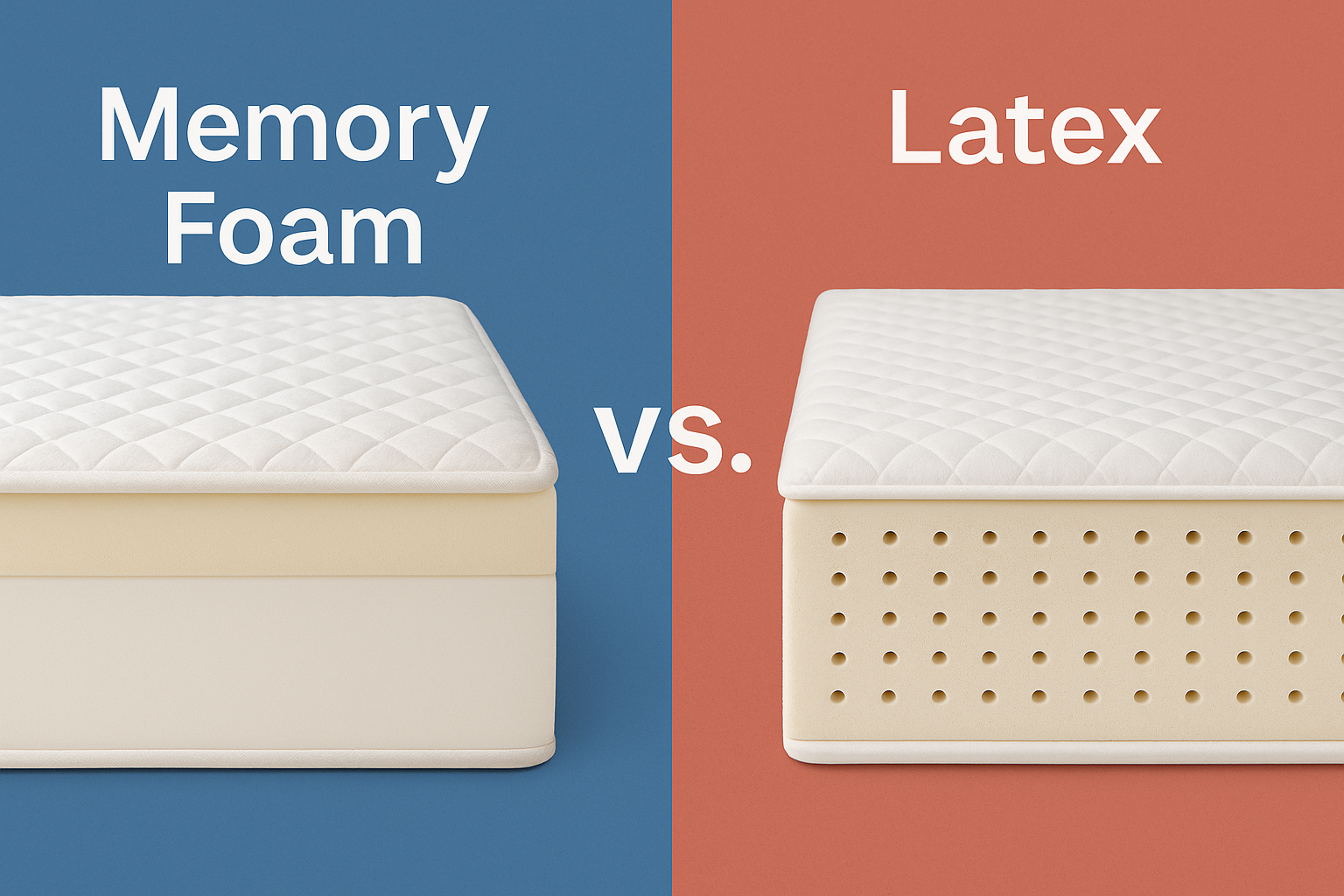
Quick summary — which to pick?
-
Pick memory foam if you want deep pressure relief and a “hugging” feel (great for side sleepers, pressure points).
-
Pick natural latex if you want responsiveness, durability, and cooler sleep (great for hot climates, active sleepers, and those wanting long-lasting support).
What is Memory Foam?
Memory foam is a viscoelastic polyurethane foam originally developed for aerospace. It’s known for contouring closely to the body and slowly returning to shape — that “sink-in” sensation. Memory foam reduces pressure on shoulders and hips, isolates motion, and can feel very cozy for people who like a cradling surface. Modern memory foams come in different densities and cooling variants (gel-infused, open-cell) to help with heat dispersion.
Best for: Side sleepers, people with pressure-point pain, couples who need motion isolation.
What is Latex?
Latex mattresses use foam made either from natural rubber tree sap (natural latex), synthetic materials, or a blend. Latex is bouncier and more responsive than memory foam — it springs back quickly rather than hugging. Natural latex tends to be naturally breathable and hypoallergenic, with excellent durability. Latex can be designed in zones for targeted support and is often used as a supportive core or comfort layer.
Best for: Hot sleepers, back sleepers, combination sleepers, those who want durable, eco-friendlier options.
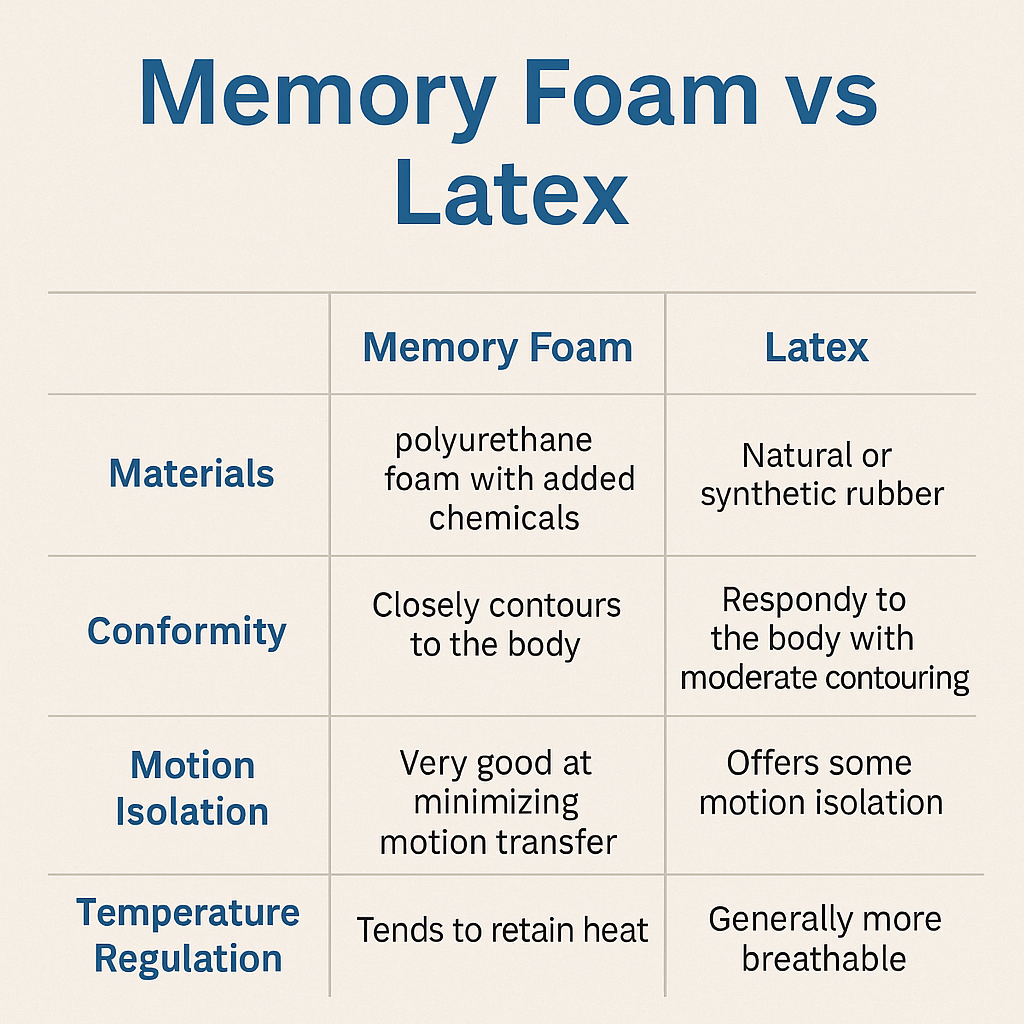
Head-to-head comparison
| Feature | Memory Foam | Latex |
|---|---|---|
| Feel | Slow-response, hugs body | Responsive, buoyant |
| Pressure Relief | Excellent | Very good (with zoned designs) |
| Motion Isolation | Excellent | Good to moderate |
| Cooling | Varies (gel/open-cell helps) | Generally cooler / breathable |
| Durability | Good — depends on density | Excellent (longer lifespan) |
| Bounce / Ease of Movement | Low — can feel "stuck" | High — easier to move |
| Allergens / Odor | Some off-gassing initially | Natural latex resists dust mites; low VOC if certified |
| Price | Mid to high | Mid to high (natural latex often pricier) |
How to choose based on sleeping style and needs
Side sleepers
If you sleep primarily on your side, pressure relief at shoulders and hips matters most. High-quality memory foam offers the deepest contouring and often eases shoulder pain. A medium-soft memory foam top layer combined with a supportive base works well.
Back sleepers
You need support in the lumbar region and enough contouring to avoid a rigid, flat surface. Both latex and medium-firm memory foam can work—latex offers quicker response and a more “on-top” feel, while memory foam gives cradle-like comfort.
Stomach sleepers
Firmness and spine alignment are key. Too soft a memory foam mattress can cause the hips to sink and strain the lower back. Choose a firmer latex or high-density memory foam with a supportive core.
Combination sleepers (move a lot)
Latex shines here because of its bounce and quick responsiveness. It allows easy turning and changing positions.
Hot sleepers
Latex is generally cooler thanks to natural breathability. If you prefer memory foam, look for gel-infused or open-cell memory foams plus breathable covers.
Couples
Memory foam for motion isolation; latex if you both value ease of movement. Hybrid options (latex or foam comfort layers over pocketed coil) can be a strong compromise.
Sleepwave picks
-
Sleepwave Crown Pro (Latex Core) — for sleepers who want cool, responsive support and long-term durability. Ideal for combination and back sleepers in warm climates.
-
Sleepwave Dream Soft (Memory Foam) — designed for deep pressure relief and cozy contouring; great for side sleepers and anyone who loves a hugging feel.
-
Sleepwave Spine Care (Hybrid/Orthopedic) — couples high-density support with comfort layers to balance motion isolation and responsiveness.
Practical buying & care tips
-
Try before you buy (in-store demo or home trial). Spend 10–15 minutes lying in your usual sleep position.
-
Check warranty and return policy. Longer warranty often signals material confidence.
-
For memory foam, choose higher density for better durability (but ensure cooling features). For latex, look for Talalay or Dunlop process info and certifications (if natural).
-
Use a breathable base/slatted frame to extend mattress life. Rotate per manufacturer guidance.
Conclusion
There’s no single “best” mattress material — only the one that fits your body, sleep style, and climate. Memory foam offers unmatched pressure relief and motion isolation; latex delivers responsiveness, coolness, and durability. If you’d like, we can help match your sleep profile to a Sleepwave model and arrange a Mysore trial.